Wednesday, April 29, 2020

Redhead by the Side of the Road


I love Anne Tyler. Maybe my favorite of hers is Dinner at the Homesick Restaurant. But I just read Redhead by the Side of the Road and was charmed. It’s pretty short, reads quickly, and keeps you rooting for love, of whatever kind, to win in the end. 

People keep being human in Anne Tyler novels, flawed, though sometimes trying very hard, even too hard, not to make mistakes. They want to be worthy of love.

I could focus on this book, even during this wackadoo time when it’s hard to focus on reading. Main character Micah Mortimer likes his routines, and that may have anchored me! He’s a misfit brother in a chaotic family, one of  Anne Tyler’s endearing routines.

He’s an IT guy and a bit of a hermit…so he has his own business, Tech Hermit. He’s “finicky” compared to his sisters and their families, but his sisters remember a bunch of personal details about people, past and present. I love how Tyler gets into his tech head in her third person limited omniscient p.o.v. “Shouldn’t they be periodically clearing out their memory caches or something?”

It was easy to return to normal life in this book, but I had a little moment of COVID-19 reading, when Micah is out very early in the morning to run, before any people are out. In his head again: “Imagine if some cataclysm had hit the city overnight.” The streets are empty. He does indeed begin to imagine the world like that, how long before he would notice, and his solitary day: “he had all the time in the world, it was beginning to seem.” This awareness makes him a little lonely. It prepares him for something.

I won’t tell you what!

Saturday, April 25, 2020

April Poem-a-Day


Like many poets in April, National Poetry Month, I’ve been writing a poem a day. I provided prompts for an online writing workshop I attend and adapted those prompts for the public library, where they are posted weekly on social media, so patrons and poets in the community can write along. I had hoped to offer and to write on a variety of topics, not to be preoccupied with quarantine, lockdown, worry, or disease, but worry often creeps in—to my own poems and those of my fellow poets.

Here’s one, for example, that began as the heart’s response to the sound of the train, just before it was leaving town headed north. I used to ride that train often, back and forth to Chicago, and would tell my husband to listen for the train horn and head for the station to pick me up. Then an ordinance was passed, establishing a Quiet Zone in town, and hearing the train now is rare.

Overground Railroad

Leaving town, the train moans once
on the cold air, unwelcome April snow
coming down like rain on silent lawns,
into silent fields. It might be a new
crew, unaware of the ordinance against
the train sounding its horn in town.
Who’s riding the train now? Is it mostly
empty, one living being for every six ghostly
passengers? By now, the train has passed
the ghost house three stories high, a stop
on the Underground Railroad, or rumored
to be. By now, the train can sound its horn
at crossings if it wants, can moan and groan,
can wail and keen, lament to heart’s content.

There, in the heart of the poem, I see the train sparsely populated, and I know why. Then the other passengers become ghostly. Then history and rumor arrive, and then grief. There is a house, just outside town, rumored to have been on the Underground Railroad. It’s a beautiful and lonely dwelling, a favorite of mine when I rode the train. When I could, I sat on that window side to see it.

This poem turned out to be a "broken sonnet." It has 14 lines and five beats per line, with much variation of meter. It doesn't rhyme, except now and then, internally, externally, or slantwise. But it does wail.

April generally gives me 30 or more drafts of poems to revise and develop over the next year. This one might stop here.

Thursday, April 23, 2020

Blithedale Postponement


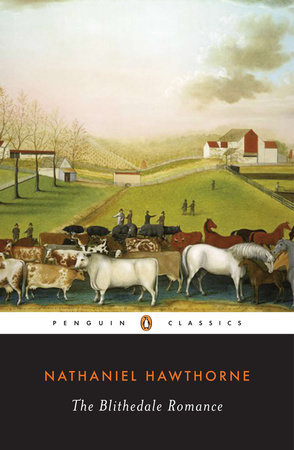
As I mentioned in the context of my loopy reading, The Blithedale Romance, by Nathaniel Hawthorne was up next, after Little Women (fiction) and American Bloomsbury (nonfiction) and the not-quite coincidence of all that genius in Concord, Massachusetts in the 1800s. (Ralph Waldo Emerson brought a bunch of smart people together.) It’s always good to read (or re-read) the right book at the right time. As I started re-reading The Blithedale Romance in mid-April, shortly after some unwelcome mid-April snow, I encountered an unwelcome mid-April snowstorm in fiction as Miles Coverdale travels to Blithedale to join an idealistic, intentional, back-to-the-land community, based on the actual Brook Farm that Hawthorne himself had visited for a time with high hopes. 

Then Coverdale gets laid up for two weeks with a rhinovirus! (common cold) in near isolation, tended by main characters Hollingsworth (driven by a single idea) and Zenobia (a beautiful woman and feminist). “Zenobia” is her writer/public figure name; she has a real name in the fiction and is probably based on feminist Margaret Fuller, who is named in the fiction, as if to separate the two, perhaps a courtesy.

Here are some more coincidences that surprised me:

--One of the entertainments in their little set-apart community is “tableaux vivants,” or dressing up as works of art. You may be aware that the Getty Museum challenge, etc. has inspired a lot of that in our current shelter-in-place situations.

--It shouldn’t have surprised me, as some summaries call Hollingsworth a misogynist, but he really is, and Coverdale, the narrator, calls him out on it, saying, “Hollingsworth had boldly uttered what he, and millions of despots like him, really felt.” Which was, basically, that woman is only a helpmeet at man’s side and must support him fully in his endeavors, blah, blah, blah. I guess the main surprise was Hawthorne outing “millions of despots.”

--Zenobia, complicatedly pissed off by this, retorts, “Let man be but manly and god-like, and woman is only too ready to become to him what you say!” Meaning, of course, that man isn’t.

--Earlier, Zenobia has said, in the context of supporting women’s rights, “Thus far, no woman in the world has ever once spoken out her whole heart and her whole mind.” It reminded me of Muriel Rukeyser, who said in a poem, “What would happen if one woman told the truth about her life? / The world would split open”

--Hawthorne sounds like a closet feminist himself, speaking through the character closest to himself in life, Coverdale, defending a broken-hearted woman:

It was nonsense, and a miserable wrong,—the result, like so many others, of masculine egotism,—that the success or failure of women’s existence should be made to depend wholly on the affections, and on one species of affection, while man has such a multitude of other chances, that this seems but an incident. For its own sake, if it will do no more, the world should throw open all its avenues to the passport of a woman’s bleeding heart.

Now, Coverdale sounds like a pretty feeling guy there above, but Arlin Turner in the introduction sees him as rather cold, aloof from fellow humans, and almost the worst villain of the piece, while I saw him as more the observer, as a writer necessarily is—Coverdale is a poet. Sigh… 

But, plot-wise, he had the power, probably, to act, and did not, and that’s what counts, alas. Even if you can’t achieve a utopia on earth, you’ve got to act in human sympathy where you can. I guess I forgave him for being human, flawed, imperfect, and a poet…

And I do think he’s right in opposing Hollingsworth, who cares not a fig for the utopian community, but only for his own one central idea, pushed relentlessly upon the innocent and unsuspecting, respecting only his will, not theirs. Coverdale thinks we are meant to tend to our own lives as best we can and “insensibly influence other hearts and other lives to the same blessed end,” not force our “philanthropy” on others or be subsumed by one overarching theory or dream.

Looping back, I should mention that the cold snap in Blithedale caused the residents to postpone their May Day celebration until later, when the weather would be nicer. Likewise, our shelter in place has been extended, postponing many things, but rightly so, as our governor, listening to the advice of experts, is thinking of the general good of all, not pressing his personal will upon us. (And that makes it a Thor's Day in the blog!)

Sunday, April 19, 2020

Antics of the Ants


The ants are marching two by two by four by dozens into our house in April, undaunted by the snow. Or they were. They had been very interested in the (covered!) butter dish on the kitchen counter and the flecks of toothpaste on the bathroom counter. But when they appeared en masse, not respecting social distancing at all, in the bedroom near my husband’s closet and dresser, he went into action with bug spray. 

He is usually a very gentle guy, and animals love him. But he does not love ants.

One was crawling up my pajama leg after some floor stretches. I have returned to yoga. Our daughter, who is training to be a yoga instructor, practiced a focus class on lower back pain on us via Zoom on Friday, and it got me back to A.M. Yoga for Beginners with Rodney Yee on Saturday and Sunday. I like Rodney Yee, forever young via video, as I am forever a beginner.

Also got back to the trail, now that the sun is out and the temperature is up. People remain friendly and polite as they (for the most part) maintain the six feet distance from each other. There are “Mind the Gap” signs up now.

I’ve reported on my “loopy reading” of fiction, nonfiction, and children’s fiction. I’ve also been reading poetry—the wonderful books Match, by Christine Marshall (Unicorn Press, 2018), Indigo, by Ellen Bass (Copper Canyon, 2020), and Blowout,* by Denise Duhamel (University of Pittsburgh Press, 2013). Next up is Duhamel’s Scald (Pittsburgh, 2017). I got the Duhamel books to read on the plane to Pittsburgh in early April for a reading event there. I won the 2019 Patricia Dobler Award, and she was the judge, and part of the prize was the reading! It was, as you can guess, canceled. The new (May/June) issue of Poets & Writers just arrived, with the announcement of this award in it, and it gave me a brief pang, tiny as ant bite in the scheme of things.

Zoom is helping me in so many ways—the yoga class, work meetings, a library open mic this past Thursday, Zoom Church this morning, and a family gathering by Zoom this afternoon, bringing together family members in Tennessee, Illinois, Nebraska, Oregon, and California. With a baby!!

*I love how “blowout” is a big fight, a big party, and a way of styling hair, among other things. In hair, it’s a desired thing; in tattooing, not. But how about that beautiful body art on the Indigo cover? And that makes this a Random Coinciday, as well as a Poetry Someday in the blog.


Saturday, April 18, 2020

Loopy Reading


After Little Women, I couldn’t settle on the right book to read next. I started Baltasar and Blimunda by José Saramago, picked up at the library book sale, which was charming for a boarding pass left inside by its donor; it is a Portuguese novel, and the boarding pass was from Lisbon, Portugal to Barcelona, Spain, back in the days of international travel. I used it as a bookmark. But the language was detailed and dense, and I couldn’t stick with it, and have set it aside for now.

Then I went to my shelf for another American classic, and pulled out The Blithedale Romance, by Nathaniel Hawthorne, which I vaguely remembered reading at some point. The underlining and margin notes indicated I had read it in some studious mood or circumstance. I skimmed paragraphs of the introduction and put it back. But, to foreshadow quite obviously, the way Louisa May Alcott does, I was destined to take it up again later!

Finally, I looked up at the top shelf of my computer desk, where I keep a row of books about Emily Dickinson, literary feuds, literary intersections, and the act of reading. 

And there was American Bloomsbury, by Susan Cheever, also scooped up at a library sale, and not yet read. This would be it, the next read, and its subtitle will tell you why, and also why I looped back to The Blithedale Romance afterwards. American Bloomsbury is subtitled Louisa May Alcott, Ralph Waldo Emerson, Margaret Fuller, Nathaniel Hawthorne, and Henry David Thoreau: Their Lives, Their Loves, Their Work.

It was exactly the right read, in part because of its “loopy” style. The author explains what she’s going to do: “a series of overlapping scenes in which some incidents are repeated, sometimes more than once.” She wants us to see the same incidents through the eyes of the alternating focal characters. “By this method I have tried to honor the characters, their lives, and their intimate connections with each other.” I remember my old self, so I confess that this method may have driven me a little crazy in the past, but the repetitions were helpful during this scatterbrained time!

It was fun to learn that teen Louisa had sort of a simultaneous crush on Thoreau, a young man, and Emerson, an old man; fun to learn (again) that Emerson basically paid for everything, that he had helped gather all this genius in Concord, Massachusetts; fun to revisit the annoying and endearing traits of Hawthorne, Bronson Alcott, and Thoreau. I understand fictional Marmee better in Little Women, when she says she is angry every day of her life, by meeting her actual husband via Susan Cheever. Ineffectual dreamer.

And Margaret Fuller, charismatic feminist, interested me the most. Apparently, several male writers have fictionalized her, including Hawthorne in The Blithedale Romance, so I will be reading it alert to the “male gaze” but with her interesting life seen recently through a “female gaze,” as well.

If you are having trouble reading, you might connect to this piece by Kim Kishbaugh in Escape Into Life. She has discovered YA books! 

And yesterday, thanks to my library’s ebook collection, I finally read The Miraculous Journey of Edward Tulane, by Kate DiCamillo. 

Yes, I cried.