Showing posts with label Blue Monday. Show all posts

Monday, July 29, 2024

Heart Chakra, Five-Carat Soul

Today, Day 4 of the meditation-stones experiment (and day 2 of "naked meditation"), was the Heart Chakra, with its mantra, "I love the world and myself effortlessly." Closing my eyes, I smiled big at loving the world effortlessly, letting myself acknowledge that it sometimes takes a little effort to love myself, right after I've been cranky, for instance, or impatient. Also, how will I love my neighbor who just put a Trump sign in her front yard? Oh, but James McBride (and Jesus) already gave me an answer, in Five-Carat Soul, a book of short stories, some of them linked. 

Here is what helped me. (I won't tell you which story, nor give the full context for the quotation, so you can be surprised when you're reading this book!) A character is revealing what someone else said: "He loves the evil in all people. Because in loving their evil, he loves the evil in himself enough to surrender it to God, who washes it clean. He's loving what God made, is what he said." Now, this might be seen as a rationalization by some, or evangelism by others, but it sounds pretty wise and compassionate to me, a way to love thy neighbor as thyself, whether or not within a faith tradition, and a way to love the world and the self...effortlessly.

Yesterday, a Sunday without church because my church space was being used for commerce, a big annual sale, we were sent on a field trip to a church of our own choosing. I chose my usual church of my own backyard, also Emily Dickinson's choice, but, at first, it was raining, so I kept reading Five-Carat Soul indoors and did naked meditation. Then it cleared up, into a wonderful breezy day.

Likewise, this morning there was no swimming--thunderstorm--but I felt a beautiful breeze coming in the window at my back, like an Irish blessing, during naked meditation. It was so easy to love the world!

Monday, July 8, 2024

Swimming in Grief

I'm swimming laps again this summer, as I've done for many years now, early in the morning, as exercise and meditation. I swim in the pool where I took swimming lessons and did water ballet as a child. After the first few lessons, when she watched us and/or read a book, my mother often dropped us off and picked us up, wet, later. Lately, swimming has helped me stay calm, rehearse things I have to do later in the day, let go of everything, and grieve. It's eight months since my mother died, and it surprises me how fresh the grief may be, in tiny moments, and insistent, like rain.

I am also reading a lot, and reading the right book at the right time. Today, I found The Swimmers, by Julie Otsuka, and it's, of course, perfect. There's a woman in it named Alice, with mild dementia. "And even though she may not remember the combination to her locker or where she put her towel, the moment she slips into the water she knows what to do." This fits with what I just learned in Remember, by Lisa Genova, about how and what we remember. 

So far The Swimmers seems to be in a community voice, a "we" voice. "And when we are finished with our laps we hoist ourselves up out of the pool, dripping and refreshed, our equilibrium restored, ready to face another day on land." While I don't hoist myself up--I swim over to a ladder--I agree with all the rest of this! And, in keeping with water ballet, I am again awake to the synchronities of life and in my reading.

I'm reading The Bad-Ass Librarians of Timbuktu for the non-fiction book group at the library, about saving ancient manuscripts, and I just read (or re-read, as I think I read it as a teen, or part of it) Out of Africa, by Isak Dinesen, for the adult reading challenge, where July = Africa. I'm aware of the irony of reading two books about Africa by white writers. At least I had already read some others on the list and the display by Black or African authors. With Out of Africa, I was consciously seeking out the author's voice to see 1) why this book is considered her masterpiece 2) what colonialism it carries in tone. Yes, the colonialism is there, along with a deep love and respect for the country and its peoples, and its animals, even the ones she shot. I was comforted when she moved past killing them to watching them.

Contemplating the Africa theme, I'd thought I'd like to learn more about Mali, as my parents housed a young man from Mali several years ago when he came to the United States to get his undergraduate and graduate degrees. He is still a family friend. Timbuktu is in Mali, so yay! I am learning a lot. I can ask if he's read this book in my next letter!

It surprised me--but why, given all the synchronicity lately? and the "plot," as I knew she would be leaving the continent--to find this in Out of Africa, which resonated with the loss of my childhood home: "In this way began for me a strange era in my existence on the farm. The truth, that was underlying everything, was that it was no longer mine, but such as it was, this truth could be ignored by the people incapable of realizing it, and it made no difference to things from day to day. It was then, from hour to hour, a lesson in the art of living in the moment, or, it might be said, in eternity, wherein the actual happenings of the moment make but little difference." This sounds like the emotional denial I witnessed in my dad, and the strange near numbness I sometimes felt, but I was most struck by the living-in-the-moment connection, for that is how I grieved and am still grieving, disconnected from linear time, and from my former self, but, yes, in the moment.

I go back to the moment of swimming. And to this line from The Swimmers: "The moment I see that painted black line I feel fine."

OK, and also this moment! Lola in the water. Eight months old and crawling. In love with her parents and with the world. Always in the moment!

Constantly countering my grief is my joy, from the moment Lola entered the world and my mother left it.

Monday, October 30, 2023

Empty Shelves


What a difficult and sweet, sad and joyous time it has been. We cleared out the house with the help of friends and family. I never thought I'd see these bookshelves empty of books. And today we moved my fierce and feisty mother into hospice care. I'm glad I got to spend some quiet time with her in the hospital and that I got to see her moved safely into the hands of calm, experienced people who will help my dad through whatever is to come next. 

The full impact of losing my mom--a gradual and imminent process--hit me as I drove down the driveway of my childhood home for the last time. The empty house...was her. 


And this is her, too!

Monday, November 28, 2022

Books in Progress + Facebook Birthdays

I love Facebook telling me whose birthday it is daily, so I can say "Happy Birthday!" but sometimes I pause and wince and think, "Is that person dead?" which is terrible to confess, but you get me, right? So many people died over the last couple of years, and we were isolated a lot, plus Facebook algorithms probably hide a lot of people from me, and vice versa, and, well, sometimes I click over to that person's page to see if they seem to be alive before I say, "Happy Birthday!" Eerily, I do sometimes see other people saying "Happy Birthday" to people still on Facebook whom I know to be dead. Sometimes I post "thinking of you" sentiments on those pages... But, Happy Birthday if I missed you on Facebook. I hope you're still alive! So far, I am, too!

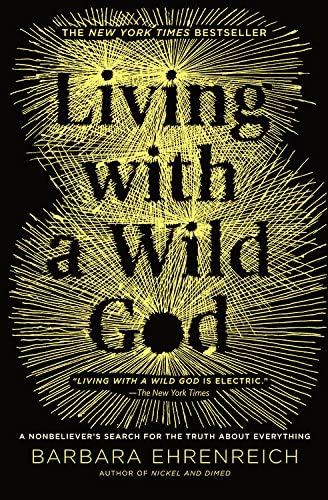
I'm reading two books at the moment: Living with a Wild God, by Barbara Ehrenreich, in preparation for the December Adult Reading Challenge at the library, a grown up book, and King Dork, by Frank Portman, a young adult book. I found the latter on our bookshelf, with an inscription from his grandparents, Christmas 2006. He remembers it as hilarious, and I was laughing out loud in bed with it last night, reading a conversation in French class, transcribed into awkward English. This may be my go-to book for laughing myself into utter relaxation and perfect health, and therefore keeping myself alive until my next Facebook Birthday.

Monday, September 5, 2022

Parade/Shy

I did double duty in the Labor Day Parade again this year, walking first with the McLean County Democrats (blue shirt) and then with Moms Demand Action (red shirt, underneath my blue shirt, on a day cool enough to wear two and take one off!)! What a great turnout of both participants and parade viewers! So many laborers! All the unions were out, as we have a workers' rights referendum on the ballot on November 8. (Vote Yes!) So many candidates! So much candy.

August exhausted me, and not just with all the Sealey Challenge poetry reading, which also enlightened and energized me. Lots of brain energy of other sorts these days. Plus...termites. Yup. Sigh. So they are gone, we hope for good, as we got the whole treatment, burned any wood or cardboard from shed or garage that might have tiny critters, and dumped even more in Marie Kondo fashion! It's like the house fire a few years back. Anything left in the attic, that might have been damaged by smoke or water, I dumped, without much perusal. This time, anything left stacked in the basement near the termite wall...went.

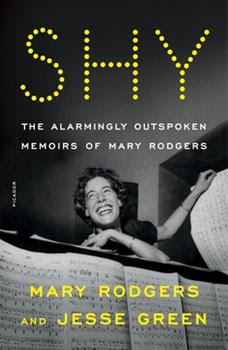
But the joy and comic relief came with the book Shy, by Mary Rodgers and Jesse Green, subtitled The Alarmingly Outspoken Memoirs of Mary Rodgers. It was hilarious and very informative. Mary Rodgers wrote Once Upon a Mattress (sometimes I burst into song with "The Swamps of Home") and Freaky Friday. Plus, my parents' lives crossed with hers, sort of. Mom and Dad met her sister, Linda, then married to Dan Melnick, in the army. Apparently, they hung out together at Fort Sill army base in Lawton, Oklahoma. Dorothy Rodgers, mother of Mary and Linda, invented the Johnny Mop, a toilet-cleaning tool, a version of which I use today! Well, not today! It's the Labor Day holiday, so I cleaned my toilets and did my laundry earlier in the weekend!

And here's a Labor Day poetry feature for you at Escape Into Life. For today! [Pink gloves from The Clean House, by Sarah Ruhl, at Heartland Theatre.]

Monday, August 29, 2022

Blue Hour

You already know the coincidence of blue here, from the title and color of the book cover, which is a photograph from the series "My Ghost" by Adam Fuss. But here is the August coincidence from Blue Hour, by Carolyn Forche (HarperCollins, 2003): "Our windows faced east, and on August evenings, the sky was a blue no longer spoken." And it's also a Blue Monday in the blog.

The "blue hour," as the helpful Notes at the end explain, is "the light the French call l'heure bleue, between darkness and day, between the night of a soul and its redemption, an hour associated with pure hovering." It is the hour she would wake with her baby son. From the title poem: "When my son was an infant we woke for his early feeding at l'heure bleue--cerulean, gentian, hyacinth, delft, jouvence. What were also the milk hours."

Other favorite lines and phrases, some blue: 

"In the blue silo of dawn, in earth-smoke and birch copse / where the river of hands meets the Elbe."

"a confusion of birds and fishes"

"a memory through which one hasn't lived"

"a moment of bluesmoke"

"l'heure bleue, hour of doorsteps lit by milk"

"pinning their intentions to a saint's dress"

"meaning did not survive that loss of sequence"

"something broken and personal, a memory"

"the stories nested, each opening to the next"

I should have anticipated this, as Forche is a poet of witness, but I didn't expect how strongly Blue Hour, especially its long abecedarian poem "On Earth," would connect to the other book I am currently reading, What is the What, by Dave Eggers, a novel based on the true story of Valentino Achak Deng, one of the Lost Boys of Sudan. He and other orphans walked from Southern Sudan to Ethiopa, hoping for aid and relief, witnessing terrible things, including the murder of parents, siblings, and friends, beatings, death from hunger and fatigue. Some of Forche's lines stuck out as something one of these boys might see: "in this camp, so many refugees" or "the little notebook of poems in the pocket of a corpse." "On Earth" has beautiful things in it, but also terrible things, a litany of everything that can and does occur. This couplet in it even matches the novel's title in a way:

     the what is? gives the wrong answer
     the what is? has ruined thought

as does the litany of "what" in the W section of the poem. And the ending, of the poem, since the beginning of the novel recounts a robbery:

     your things have been taken
     your things have been taken away

Monday, August 22, 2022

Should Our Undoing Come Down Upon Us White

I woke up to dense dog, the world gently white outside the window, and picked up this snowy white book, Should Our Undoing Come Down Upon Us White, by Jill Osier (Bull City Press, 2013), cover painting by Marina Mariya. The first poem suggests it (the poem itself, perhaps the book) won't be telling the whole story, not yet, but that it "is not about loss," a momentary comfort, but maybe it is, or about waiting, or about readiness.

I wasn't ready to spot coincidences on this Blue Monday in the blog, but I found "a dead-blue tulip" in the poem "Last Dream of Flowers."

The poems are quiet and gripping, like a cold and snowy day at the edge of the woods, silence fallen. The title poem begins:

     Even while we talked, snow must have been falling. Now it's a scar:
     I've mostly failed in the rooms

     of honesty and forthrightness.

Then there's the story of a child sledding.

I find myself reading and re-reading these snow-packed or gently drifting poems. I see little flickers of red and flame and skies and fields of snow. In "Flame,":

                                   Your heart, red wax,

     slipped soft from its nail. I shaped it back, and the two of us lay waiting
     in a cabin's draft.

What if you could live in a box, a camera obscura?

     A small, simple box with a tiny hole
     for light to come through,

     make everything clearer?

Or a snow globe? In the middle of the book, in the middle of the poem "Obscura," the scene becomes object suddenly:

     Shaking the scene now, snow falls,
     smoke rising up to meet it.

I am not ready for winter. I am not ready for snow. It is only August. Ah, but those first yellow sweet gum leaves already litter the yard.

Monday, August 30, 2021

Men, Women, and Ghosts

This one I chose for its fabulous cover after becoming intrigued by Debora Gregor's In Darwin's Room. The cover art is Vanitas Still Life by Herman Henstenberg. In Men, Women, and Ghosts (Penguin, 2008), I found educated and allusive poems, imaginative, ekphrastic, and persona poems, some clever and funny, some connecting with women in myth and fairy tale so they seem at times to be engaging in a kind of pleasant, modest, self-mythologizing. 

As in "Beauty in Florida," where we see Sleeping Beauty at 15 and 50.

Here at the end of a month full of poetry books, I relaxed again into noticing where I intersect with the poems and where the books intersect with each other. "Her Posthumous Life" is in the voice of Fanny Brawne, someone I once played in a one-act about John Keats. (Wikipedia has a whole section on her "Posthumous controversy"!) Greger's poem ends, referring to a Keats ode,

          To Darkness, it begins,
     and then goes on. Goes on into darkness,
          knowing the weight of earth.

This, of course, connected with the darkness in Goldenrod.

In "Chekhov for Children," the speaker is a stagehand for the play Three Sisters, dressing Olga between scenes, just as I, as an understudy also playing a small role as a maid, dressed Masha backstage at Steppenwolf years ago! You never know when or how reading a poem might cause the past to wash over you.

Or a dream. In "Death Comes to Florida" (which also reminds me of the news, now), an elegy for Donald Justice, Greger's image of Death as a wild boar reminded me of a recent morning dream of a wild baby pig sleeping under a baby blanket on my lap. (What does it mean?!)

Side by side with all the intersecting, I just enjoyed the language, like this couplet from "Missing":

     A water taxi opened the Grand Canal like a book.
     Its pages were green, edges deckled with foam.

And I should mention that it's August in "The Marriage of Orpheus."

Monday, August 23, 2021

Salvinia Molesta

As I took my book and pen and spiral notebook outside to read and take notes, it reminded me of homework, in a good way, awaking in me some back-to-school spirit. And Salvinia Molesta, by Victoria Chang (University of Georgia Press, 2008) provided some sad lessons in Chinese history inside its amazing poems. And there were crows and other coincidences, too.

"Jiang Qing" is a persona poem with the epigraph: --Mao Zedong's wife committed suicide while under house arrest for crimes related to the Cultural Revolution. In it, she says

     I used to speak so smoothly in pavilions, even
     crows and clouds came down to hear.

Chang's "Ode to Iris Chang" is about "the December 1937 invasion of the Chinese city Nanking by the Japanese army," to quote the book's Notes, and another suicide. This book took me to other parts of the world, to new perspectives on my previous learning.

And I learned what Salvinia molesta is, "[k]nown as the world's worst weed," in that poem's epigraph but looking a lot like an aquatic plant in my town's water feature. Indeed, Wikipedia tells me it can be used to clean water of pollution, and I do think my town's greenery is self-watering and self-cleaning. So, hmm. But that title poem is also about a businessman tried and acquitted of obstruction of justice. 

So I keep learning. And the coincidences continue, words or images found in the other August books: cicadas, honeysuckle, pigs, cows, the moon, gardening, as in "Spring Planting": 

     I am gardening, but my mind is tilling. The crows enter my yard.
     They remind me of ink slabs

     Chinese calligraphers used--not until mixed with water did
     their black ink breathe and broth.

And then, thanks to one of Chang's Notes at the back of the book, I assigned myself a little compare-contrast homework. Chang says her poem "'Ars Poetica as Birdfeeder and Humingbird' is conversing with Louise Gluck's poem 'Witchgrass' in Wild Iris, in particular, her lines: 'I don't need your praise / to survive' and 'I will constitute the field.'" So I pulled out The Wild Iris, possibly my favorite book of poems ever, and re-read it, starting with "Witchgrass" before going back to the beginning. It hits me every time, that last line. And here's the last stanza before it, too:

     I don't need your praise 
     to survive. I was here first,
     before you were here, before
     you ever planted a garden.
     And I'll be here when only the sun and moon
     are left, and the sea, and the wide field.

     I will constitute the field.

And in Chang's poem, "I am not

     a weed, I need your praise to survive.
     The field will consume me.

     The field has chosen sides. The field is
     not hungry for the middling.

     How I hate the field and what it sees, its
     teeth digging out the ochre

     of mediocre....

Ah, the poet's worst fear! Being mediocre. And how wordplay partly disperses it! This and the other ars poetica poems in Salvinia Molesta are bracing, honest, inspiring. It feels good to be schooled so.

And it was frequently August in The Wild Iris.


Monday, August 16, 2021

Only As the Day is Long

Only As the Day is Long, by Dorianne Laux (Norton, 2019), is a big book. It had a bookmark* in it, so it's part new read, part re-read, and I've read many of these poems earlier, too; she's a poet I've admired for a long time. The bookmark was at "The Orgasms of Organisms," about insects mating, and as I read it, cicadas were loud around, my husband reading in a hammock hung from our sweetgum tree and half-dismantled swingset-fort contraption left by the previous owners of our house. 

We are living a long, perfect summer day together. I've been reading and weeding. He's got the electric mower charged and parked out here as if he's going to mow. It's still Sunday...but I won't finish this book till Monday, as I can read "only as the day is long" and then no more.

*a Jesse White, Secretary of State, Illinois Center for the book bookmark!

How I love "Savages," about four boys reading poetry on the floor of a bookstore. "Democracy" gives me her political insight: "You can feel it now: why people become Republicans," but she isn't one, evidently. There are poems about the homeless, the poor, the troubled and disadvantaged, the hard-working class. Waitresses, nurses.

There are poems about trees. "Cello" is also about love, music, transformation...and about "a dead tree...fall[ing] into the arms / of a living tree," coupled then forever. Poems about birds, starling, raven, crow. About men, beloved, remembered, soldiers, musicians, Mick Jagger, Philip Levine.

I find my coincidence, the phrase "Against the insomnia of August," while reading, awake, in August. I find many a favorite stanza. Here's one, from "Late-Night TV":

     We know nothing about how it all works,
     how we end up in one bed or another,
     speak one language instead of the others,
     what heat draws us to our life's work
     or keeps us from a dream until it's nothing
     but a blister we scratch in our sleep.

Often I say to myself, I am never lonely, or hardly ever, I say today, Blue Monday in the blog, but yesterday afternoon, I was strangely lonely, and called some friends, and turned again to poetry, this book, an open-hearted, yearning, sometimes lonely book, and it helped.

I saved the last section, the new poems, for today, Monday, Sealey Challenge, Day 16. But yesterday I let the long day's shadows fall over me on the weathered wooden glider, softened by an ivy-print comforter (since I can't find any glider cushions at Bed, Bath, and Beyond...and don't really shop anymore, and now this is just like a diary, this reading/writing practice, sorry...), and I rested.

Ah, but the new poems, read early on this Blue Monday, are mother poems, death-of-the-mother poems, beautiful with complicated grief. Piano music poems, for the mother played. With touches of bedroom slippers, a metal collander, Route 66 as the Mother Road. Another favorite stanza:

     There will always be
     silence, no matter
     how long someone
     has wept against
     the side of a house,
     bare forearms pressed
     to the shingles.

And here, in "Letter to My Dead Mother," is a couplet I recognize as similar to something my own mother has told me:

     You told me when you were 72
     You still felt 25 behind your eyes.

Monday, August 9, 2021

Made To Explode

The first poem is about Tater Tots, and the second poem is about "buying weapons," so I definitely encountered the unexpected in Made to Explode, by Sandra Beasley (W.W. Norton, 2021). And then it all came together in "Einstein, Midnight," one of several prose poems in the book, in the sentence, "Anything, in the right hands, can be made to explode." Many details of history here, including how the poet's personal history intersects with American history. In "My Whitenesses," I learned what the epithet cracker means and found these three pithy lines:

     My performative strip
     of self, still
     trashing up the place.

Jam-packed with meaning. And in "Monticello Peaches," a poem about Thomas Jefferson and Sally Hemings and her brothers, I learned the difference between cling and freestone peaches. It's hard to bear the poem "Black Death Spectacle," about Emmett Till. "Kiss Me," about Ruth Bader Ginsburg attending the Cole Porter musical Kiss Me, Kate, makes me never want to see it, alas, and to wish again she were still alive. Oh, how "Winter Garden Photograph" hit me in the heart, with the words "Carl died. Life is over" written on a calendar that survives grief. And "Lazarus" is a glorious poem in the grand tradition of cat poems that makes me miss my cat, all my cats. Ah, so it is a Blue Monday in the blog, and another Poetry Someday in pursuit of the Sealey Challenge.

Tuesday, August 3, 2021

Paris Palooza

As I recall it, and this was many years ago, Richard Jones and his new wife missed their flight to Paris, and the plane crashed, killing everyone. In Paris (Tebot Bach*, 2021), on a later visit, everything is calm; it's a beautiful city, filled with history, poets, painters, composers, sculptors, ex-patriots, and flâneurs, even the Little Prince. You'll find conversational rambles here, sweet interactions with other tourists; quiet, inward moments. In "Brancusi":

     Consolation is not what I came here for,
     but it is better than anything I might have wanted
     before I came to Paris.

I might say the same about the book, Paris! I just spent the weekend--of Lollapalooza--in Chicago, seeing a play, plus family and friends, roaming my old neighborhood on a beautiful, breezy summer day. We, too, were flâneurs, stopping at a sidewalk cafe for mojitos, perfectly muddled with mint. How lovely to visit a city that, because I once lived there, still reminds me of home. How consoling, after witnessing the crowds, actually to come home! In Rodin's gardens, Richard Jones misses his own...

Playwright August Strindberg, alas, "could find no solace."

     He came searching and found nothing---
     Paris almost did him in.

In contrast, in "Strindberg and Miller," Henry Miller did, and became brave enough to face the future by accepting the present. Look at this:

     But in Paris,
     Miller came to understand
     freedom is obtained by the acceptance of suffering
     and by giving suffering meaning.
     He foresaw the future of poetry,
     the terrible day when poets
     would deliberately make themselves unintelligible
     and renounce their power to move us.
     Such poetry, he said, is worthless,
     a betrayal of trust.
     The world, Miller insisted,
     hangs on the poet's every word;
     the place of renewal is the heart, he said,
     and there the poet must anchor himself.

Richard Jones does anchor himself in the intelligible, via the heart. His Paris is full of photographers and philosophers, booksellers and bakers, children and old men, bicycles and boats. The play I saw, after the mojito, was called Riding the Bicycle. I love these lines from "'The Drunken Boat.'"

     The bicycle woke me to the fact
     I was walking Saint-Germain's winding streets
     a little bit like a drunken boat myself,
     adrift on a sea of reveries.

I'd tell you more, but it's late, I'm sleepy (I'm drinking wine to make sure I sleep), and, as Richard would tell me...

     ...in our numbered days
     we will never finish
     all the work we are put here to do.

(And this is only Day #2, of the Sealey Challenge.)

* "tebot bach" means "little teapot"!

Sunday, February 14, 2021

Rough Week

I had a rough week of not being able to do or say anything right 1) in Zoom meetings 2) in general. People sometimes disappear in Zoom if someone is screen sharing, and it's getting harder and harder for me to connect, engage in true communication, and feel like myself. Also, it's so very cold outside, and I'd rather sit on the couch reading books, wrapped up in a soft blue fleece blanket, than do anything else. 

Today I gave in to the couch, and that produced 4 poem drafts, a healing calm, and restored my sense of who I really am. Sigh... It helped this past week to call up some friends up spontaneously on the phone. Thank you, friends! It's been almost a year of isolation, and maybe I hadn't felt it as intensely till now. I know I've had it easier than many, as a shy person and an introvert and someone with a safe, masked, part-time job. Feeling for all the rest of you, you can be sure.

This week I read things with blue dustjackets and/or circular patterns in them. One was a play--3 women trading conversations à la ronde. One was The Midnight Library, by Matt Haig, where one must choose among one's parallel lives in the multiverse. One was Faithful, by Alice Hoffman, in which a woman punishes herself, needing to heal and be forgiven. I was feeling like that. It helped to write some little poems, to send some poems out, to have a few taken.


One was The Beginning of Spring, by Penelope Fitzgerald, a writer I like because of her writing and because she was a late bloomer, and a title I like, because of the hope in it. Sigh... The cover of the paperback, though, had snow. It takes place in Russia, like all the Russian stories in A Swim in a Pond in the Rain, by George Saunders, which I had just finished. The Beginning of Spring had a circular structure. I did indeed read all these books at exactly the right time. And now I am reading the Collected Stories of Shirley Hazzard, who calms with the clarity of her style, her subtle humor, her precise observations. Its dust-jacket of coral and gray calms me, as does her sense of nonlinear time: "she couldn't be sure that she was not recollecting something in the future." This has happened to me.

Monday, October 26, 2020

Lambslide

Yes, I do hope for a lambslide. But in the moment, I am just happy for small joys, like finding the book Lambslide, by Ann Patchett, illustrated by Robin Preiss Glasser, as part of my work today! As things change and adjust during these Covid times, I will now sometimes process children's books, as well as grown-up books, plus movies and music, at the library. So Lambslide came my way, and I hope that Escape Goat, their newest collaboration, will, too! 

As you can see, Lambslide is about some sliding lambs, as well as how to work together to help create what you want in the world. Plus voting. Looks like Escape Goat has a similarly wise message delivered in a similarly charming way, as I can tell from its book trailer here! And I bet you'll like this interview!

Monday, August 31, 2020

Sealey Challenge, Day 31

What a month, what a challenge, and what a joy: to read a book of poems a day in August. Here they are! A big thank you to poet Nicole Sealey, who dreamed up this challenge to make sure people made time to read poetry! I'm glad to have made the time, and it was fascinating to see the connections I felt to the poems and poets, and the connections between the poems in the books. 

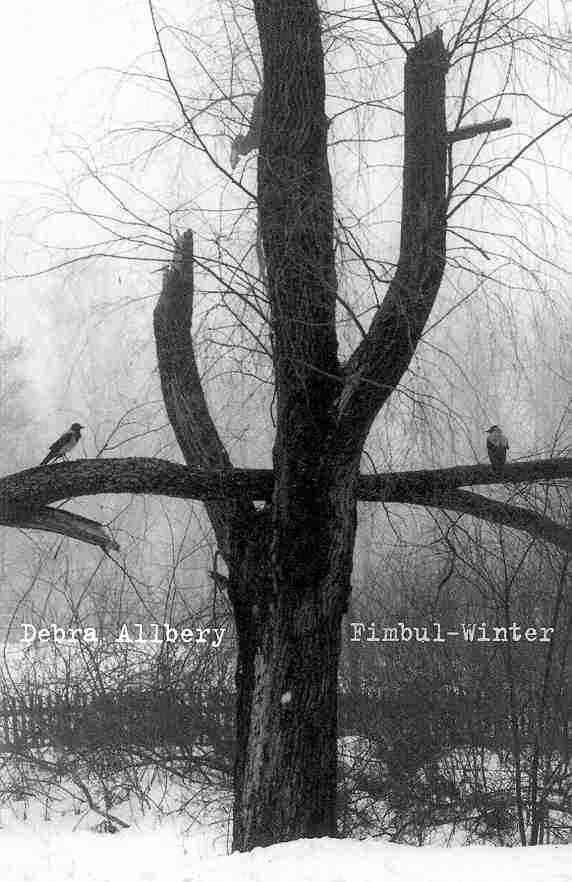
Today I met again fire, tornado, television, and elegy in Fimbul-Winter, by Debra Allbery (Four Way Books, 2020). Holy moly, do I know how to pick them or what? I put this one on the pile back in the super-hot days, thinking winter images might give me a little relief from the heat. But the weather changed, and it's gorgeous. And now I realized I've ended with Fimbul-Winter, aka Fimbulvetr of Norse mythology, "the harsh winter that precedes the end of the world and puts an end to all life on Earth." Just what we need.*

This was a cold book. It wasn't always winter in the book, but it always felt cold--and mysterious and haunted. "Chronic Town" describes "that icebound city" where:

     In the library, the homeless slept upright
     at long tables, gripping their open books."

Of course, I watched some short training videos at work today on the homeless in the library. I worry about them this winter, if libraries have to close again, or have severely limited hours due to Covid. A Fimbulvetr, indeed.

The post office is under siege but there are still letters in Allbery's poems! Letters to a lost love. "This morning / I drove twelve miles just to mail a letter." And "Sometimes I still address / envelopes to you, I even stamp them, / stand them empty, weightless on my desk." Well, that's a lonely image. It's in the poem "Constellation" (which is a letter, opening, "Dear C--"), where I learned more about Orion:

     I know that Orion means foot-turning wanderer.
     That Rigel, the brilliant star marking his left foot,
     is actually two stars revolving around each other.

I'm going to stand looking up at the sky tonight, for sure.

In "Firelands," I learned again about the mine fire, still burning, that wrecked an Ohio town and met up with two random coincidii: 1) I also have Ohio family connections and 2) I also propped up my window today with a stick of wood, similar to this:

                                                       In summer,
     propping up my bedroom window with a scrap
     of plywood, the heft and heavy rattle of warped glass.

My window is still propped open now, with crickets calling me out to see Rigel. 

In "After Vermeer," the husband is up on the roof clearing out the gutters in the rain, in a dream, just like my husband, in waking life. And while I read this afternoon, the neighbor girl came out again, wildly singing in the breeze. It's September tomorrow and September in the poem "The Wakeful Bird Sings Darkling," but it's still cold.

     The sun could never find its way
     to our windows; the walls were thick
     as a bunker's, stolid, stone and stone
     and stone.

A bunker is a good place to wait out the end of the world, right? This is the September of 9/11, and she's home in their stone cottage with a sick baby:

     That September morning's iris of sky just as fierce,
     stripped and raw, too close; I shielded the baby
     with my shadow. Then the quiet was tipped
     by the ratchet of a kingfisher plummeting
     from the power lines into the dark mirror
     of our pond.

This baby brings some welcome joy into her life and this book. "Where is our laugh?" he asks. "Where does it live inside us?" And so do "[t]umbleweeds...wild as untethered joy..." But this Fimbul-Winter feels cold throughout, even the fire moments, even the feverish moments, cleaving to its title and theme. I was astonished by the clarity, and a circling back, of this set of lines in Part 4, Death in the Woods, of "In the Pines":

                                          The point

     of the story is to keep her cold mystery,
     keep that circle drawn around her

     higher and higher, a glass wall, keep everyone
     from getting any closer.

*Also, I should maybe now watch Thor: Ragnorok, which is also about this, and to make it a Thor's Day on a Blue Monday, and, of course, a Poetry Someday and the recurring Random Coinciday in the blog. (Wait, does that movie poster say November 3?!** Aauughh!) Tomorrow I resume a previous project: chalkboard poems! The plan is a short poem a day on the green easel chalkboard beside my front stoop, poems posted at Facebook and Instagram, and I'll probably tell you about them sometimes here, too!

**This movie is already out--came out in 2017, like several of the books I read!--but November 3 is looming as the end of the world, alas. Please, please vote, America, and save us all.

Monday, August 24, 2020

What Keeps Us Here

Today, in the cool comfort of my home office, because it was too hot outside, I read What Keeps Us Here, by Allison Joseph (Ampersand Press, 1992). This must be a re-read, as all the sweetness, particular candies, and images of "Penny Candy" came rushing back to me, but I probably didn't read it back in 1992, when I had a two-year-old and was in graduate school. I remembered vividly. too, the innocent thrill of "[f]our brown skinned young girls" discovering their naked bodies in a basement in the poem "Accomplices." And the sorrow of losing her mother to cancer. 

Probably different things took hold of me this time. This time, I was struck, in "Endurance," by these two lines: "I should say this plainly: / a woman, dying, seeks God." Yes, so plain, so strong. And the terrible, beautiful, true moment, in "At That Moment," of learning of her mother's death by telephone while away at school. This one connects with a story told yesterday, on Zoom, of when our family friend learned of her father's death by phone while staying with my parents. She wailed all night long, and my mother sat up with her. And, in Joseph's poem, "They put me to rest / in the narrow dorm bed, / my room now strange, unfamiliar..." The disorientation of trauma, of grief.

Later, some comfort from "The Idiot Box." I was glad to see again "Lucy bawling after Ricky, The Odd Couple / clashing, Spock and Captain Kirk / on the flimsy set of the Enterprise" via reruns on late-night tv. Then the poems "Falling Out of History," its content and its epigraph by James Baldwin, and "Broadside: from Decade's End" connect to my side-by-side nonfiction reading this week: We Were Eight Years in Power, by Ta-Nehisi Coates. I have just finished his essay on Malcolm X, and here in Joseph's book I read:

     First day freshman year,
     I saw two other black faces,
     was dumbfounded later when
     a roommate asked, What's lynching?
     her eyes lifted from Malcolm X's story.

But back to life in the tender and fleeting moment. I love this imagery in "Rationale," a poem about visiting "the fire-singed tenement" of an old lover:

     Now we're nervous memorabilia:
     letters, cards, one pressed flower,
     colorless. Wanting you, I'm skittish,
     quick as a hand of three card monte.

And my heart is breaking at the beautiful lovemaking "keeping us here just one moment / longer" (love that line break!) in "Preservation" and risky nights of "In Fear of Sleep": "I may seem frail, but it's / you who fights, who could / blink away before I could // do anything." The fragility of life so present:

     you might not wake--your breath
     stopping dozens of times
     throughout the night, heart
     thudding to keep you alive.

In "What Keeps Us Here" are lines that remind us that we slip away:

                        Soon you'll sleep,
     close your eyes to drift
     through its uneasy thoroughfares,

     its way stations and islands
     of dream, terrain where your footing
     slips, balance sliding out

     from under you.

I wish Allison well in her ongoing grief, and thank her for these poems.

Monday, August 17, 2020

Our List of Solutions

Well, this was a fun one. Our List of Solutions, by Carrie Oeding (42 Miles Press, 2011). I read it too quickly because it has a lovely rambling, conversational quality, funny, with surprises, and sometimes lonely and sad, too. I have lots of favorites lines--I could make a list of them! But it would be too long, and it wouldn't solve anything, but here's one: "I want to make something beautiful out of the everyday." So do I, Carrie Oeding. I love your titles, too, and your impulse to make lists. "Prelude to How the World Works" starts with this line: "Envy the list, its certainty of what's needed in the To-Do." 

I wrote a to-do list yesterday and did not look at it once. Instead, I looked at old letters and the lost world, and today I'm exhausted. Today I brought the kids' stuffed-animal toys up from the basement to air out and sort, deciding what to save and what to toss. I texted pictures of them, all arrayed on the glider and chairs on the patio, to the kids, and they chose favorites (circling them magically on their phones) and I chose more, and figured out I can actually wash some of them on gentle in little mesh bags. 


Of course, "It is better I included toys," says Carrie Oeding, about what she might plant, in her poem, "Coming in From the Garden While I Think of Going Back." Yep, that makes it a Random Coinciday, as well as a Blue Monday in the blog, and a Poetry Someday, specifically  #SealeyChallenge Day 17.

More favorite lines:

"My friends say I don't mention my friends enough. Give us names!"

"Dancing is one way to have joy."

"Oh boys and men, I'm sorry, / my back turning has nothing to do with you."

"Apology to Meditation," a title, and the long sentence in the center that does exactly what I do while meditating, so, likewise, Sorry, Meditation!

I loved reading the poem "Storm's A'Comin" while realizing I would need to load up the toys soon and take them in, as my phone was giving me a weather warning, and the other book I am reading is Isaac's Storm, by Erik Larson, about the hurricane that devastated Galveston in 1900. I was reading a weather statement about winds unlikely to rotate, but, hey, a funnel was sighted in LaSalle County... Also, there is a pineapple in this poem, as in several I have encountered this month in various random books I am reading. 

The "Prelude to How the World Works" contains a list of questions and a list of answers that don't exactly line up, just like the world! And this delightful answer: "A: While considering leaving, look on page 66." You know I did. And I found the poem "And That is How the World Works." It was lovely to read a winsome book with friends and neighbors in it. (She gives some of them names!) To go "Dancing in Shorty's Bar." To discover "Sandy's List of Solutions."

Here's another favorite line: "I could live next door to disappointment." And another, from "Morning Song for the Porch Light": Still on, you greet the sun with your uselessness...."


Monday, August 10, 2020

The Poetry of Strangers + Delicate Thefts

Brian Sonia-Wallace was a writer-in-residence for Amtrak and the Mall of America and has his own small business called RENT Poet, and, you guessed it, he writes poetry for strangers on a typewriter! His book, The Poetry of Strangers: What I Learned Traveling America With a Typewriter (Harper Perennial, 2020) was, I have to say it, a great ride. It's got lots of poems in it, including translations, so I was going to count it toward the #SealeyChallenge, but I also read another Debra Kaufman book, Delicate Thefts (Jacar Press, 2015), and there are tiny stolen things in both books, both concrete and abstract.

Like me, Brian is an actor, too. Unlike me, he approaches his poetry writing, as well as his reading aloud, as performance. Like me, he connects poetry with attention and listening.* He actually composes poems after listening to his customers' stories, writing the poems they need. Vending his poems across the country, he has worked with all kinds of interesting performers, including clowns and witches, and has appeared at big corporate events, malls, music festival, and, interestingly, a detention center to document (in poems) the undocumented.

*Debra Kaufman dedicates Delicate Thefts "to listeners everywhere." I sense she's done her share of the kind of listening that results in poems, too. In "The Receiver" she's listening at a bar: "When I...look straight / into a stranger's eyes, / always he will tell me his story."

Brian Sonia-Wallace experiences that intimacy, too, in talking to strangers. They will tell the deepest things. Back to Kaufman's poem: "Two drinks in I have taken / the gift of his loneliness." Here, the loneliness was a gift, not a theft, but the stolen things in Kaufman's book include a locket, a wallet, stolen innocence, pride, self-image. All, yes, with a delicate touch.

Stolen lives. In "At Duke Gardens, After Another School Shooting," there is nothing to do but seek solace, remembrance, and "peonies you can wash your face in." In "Trying to Find a Way," sometimes the heart is too full, with "no room for another's story." 

And sometimes it's "A Perfect Day to Hang Out Laundry" and let a memory waft in as a comfort:

     His first day at kindergarten
     Danny said, My shirt smells like wind.

Monday, May 25, 2020

Weather or Not


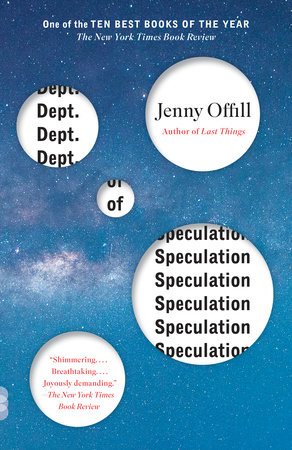
I have finally discovered Jenny Offill! For all of you who were reading her all along, isn’t she wonderful?! She writes a kind of fragmentary prose—vignettes, quotations, snippets of dialogue, prose poems, flash fictions, mini-scenes—all held together by a narrative flow/arc and a narrator’s consciousness. Gorgeous!

I started with Dept.of Speculation, about being a mom in a perfect-yet-shaky marriage instead of being a “monster artist,” as planned. The point of view is a crucial element of the story telling in this one, shifting from first to third to first again, so quietly. At one point the narrator is speculating about the phrase “wayward fog,” a state of mind to watch out for! “The person who has the affair becomes enveloped in it.” A little later, “It is during this period that people burn their houses down.”

On aging (though the narrator is still pretty darn young!): “But now it seems possible that the truth about getting older is that there are fewer and fewer things to make fun of until finally there is nothing you are sure you will never be.”

Then I read Weather, the perfect climate-change follow-up book to A Children’s Bible, by Lydia Millet, who thanks Jenny Offill in her acknowledgements! And Weather is “for Lydia”! (This Lydia?! I think probably yes.) Anyhoo, I easily connected with this one because the narrator, Lizzie, is a lot like me: she works in a library, has a “twinging knee,” and is terribly upset by the most recent presidential election, which seems to spell the end of the world.

So, yes, it’s a book about disaster psychology and preparedness—“…the superrich are buying doomsteads in New Zealand”—but it’s climate change, not pandemic, bringing on the end. With a context of 9/11. Her friend from Iran, who left right before the Shah fell, gives her insight on that: “Your people have finally fallen into history, he said. The rest of us are already here.”

The superrich retreating into remote or gated safety is a Millet/Offill parallel. In Weather, the superrich who want to go to Mars get to answer a survey question: “What will you miss most on Earth?” “I will miss swimming the most.”

I will miss swimming on Earth! The local pools are closed this summer, a good choice. Sadly, as I write, this is the Memorial Day weekend of photos posted on the Internet of vacationers crammed together on beaches and in waterparks. Oh, there will be illness and death as a result, and not just among the vacationers. Alas!

In Weather,

…there’s an expert giving advice about how to survive disasters, natural and man-made. He says it’s a myth that people panic in emergencies. Eighty percent just freeze. The brain refuses to take in what is happening. This is called the incredulity response. “Those who live move,” he says.

Lizzie, the narrator, is helping to answer the emails of Sylvia, a climate activist also devastated, of course, by the election and by the relentless damage that now there is no hope of reversing. She says, in a speech, “What it means to be a good person, a moral person, is calculated differently in times of crisis than in ordinary circumstances.” Oh, my, we are challenged now, aren’t we, on how to be a good and moral person. I admire so much of what I see out there, and it helps to counter my despair over the masses in the waterparks. Yes, Mr. Rogers, I’ll keep looking for the helpers.

And reading. Jenny Offill’s prose style helps. Each fragment is like a moment lived fully, then let go. It is, therefore, like a meditation.

Friday, May 15, 2020

Words I'm Not Writing Down


My clothes still fit, and my ear holes haven’t closed up, small good things. I do sometimes wear earrings for Zoom meetings, and I wore some yesterday when I went back to work for the first time, processing library materials in a closed library. Lots of hand-washing, careful use of three disinfectant wipes (for door and cart handles, surfaces), and judicious mask wearing. It felt good to see people—the few who were there, only four in the building at all, I think, plus some construction workers renovating the bathrooms, but I didn’t actually see them; I did see the smaller music collection, reduced to make room for a new accessible bathroom. A pang, but 1) what’s done is done 2) many people get their music in other ways now 3) we’ll have an accessible restroom on the main floor!

It felt good to clear off my desk.

Mostly, I’ve been working at home. Learning a lot, shifting to some tasks that are already in my wheelhouse (as a reader, writer, and editor), and wondering if and how my library job might change accordingly. All the articles I’m reading about libraries and workplaces re-opening do suggest that, since there is no return to the “normal” of before, we might consider who can still work from home and how to re-structure workplaces for health safety, privacy, and fewer shared work stations. Sigh, more like the cubicles of an earlier era. Not to mention the possible health scanning devices we might need to walk through, like metal detectors but taking our temperatures…

Science fiction that isn’t fiction. Of course, the great science fiction writers have always been writing about real science, often predictive science. I was reminding my folks that zombie movies begin with a virus, a virus that wants to live, and so it is very contagious.

On Wednesday (I think?) I was describing the plot of the movie Children of Men to my mom. (I still need to read the book, by P.D. James, no doubt as an ebook, under the circumstances. Even though I went back to the library, I am not checking out any physical materials till our policy is in place for that!) Pollution or something has reduced human fertility, and yet there may be a baby, there may be a safe place to raise a baby!! Oddly, this has been a go-to movie for me at times. Like The Fifth Element, which I also watched again recently, it shows me decent people acting decently alongside those who don’t in a scary, chaotic world with aspects of regular life and its ironic excesses despite the general dystopia of it all.

“What happens?” my mom asked, wanting some hope at the end. I hadn’t wanted to spoil the ending, but she needed the hope, which I could and couldn’t give her, because of the delicate, watery nature of the ending, but I could stress the big boat of rescue coming near.

This is a Blue Monday in the blog, even though it's Friday. Some weeks, it feels like Monday all the way to Wednesday, when it starts feeling like the Friday that will never come. There are things I am saying to myself these days, in words in my head that I’m not writing down—not here, not in my private diary, not in poems. They are ongoing. They come while I am walking or working, they interrupt my reading. They are mixed—like life. They have hope and fear and despair, darkness and light. I don’t know if I will ever write them down.